Murti, Samsing, Jhalong & Bindu: A Dooars Road Trip
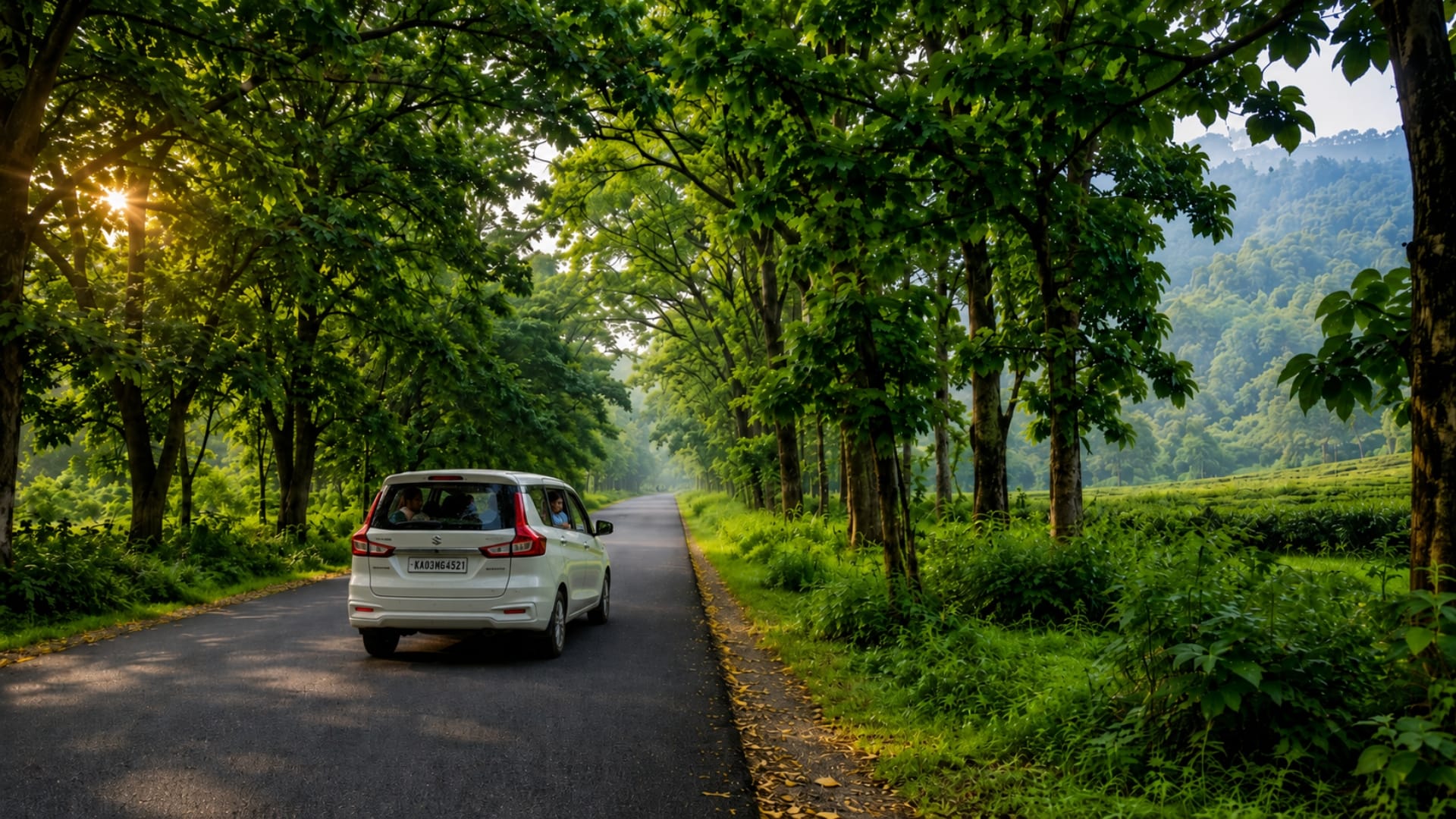
The forests usually get most of the attention when people plan a holiday in Dooars. Gorumara, Jaldapara and Chapramari naturally feature in many itineraries.
But some of the most enjoyable parts of a Dooars trip happen outside the national parks.
A road trip through the region brings a constantly changing landscape. One stretch takes you past tea gardens, another runs alongside forests, and a little later, the road opens towards the Himalayan foothills and the rivers flowing down from Bhutan.
Murti, Samsing, Jhalong and Bindu are four places where you can experience this side of Dooars. October can be an especially interesting time to explore them, as the landscape remains green after the monsoon while outdoor travel gradually becomes easier.
Murti: Start the Journey Beside the River
Murti is one of the easiest places to include in a western Dooars itinerary.
The settlement takes its name from the Murti River and lies between the landscapes of Gorumara National Park and Chapramari Wildlife Sanctuary.
That location makes Murti useful even if a forest safari is not the main purpose of your trip.
The river and surrounding greenery retain much of their post-monsoon character during October. A visit does not have to involve a packed sightseeing schedule either. Spending some quiet time near a safe riverside area, enjoying the scenery and taking a break from the road can be enough.
Murti also works well as a stop between a Gorumara visit and a drive towards Samsing or Jhalong.
Samsing: Where Tea Gardens Meet the Foothills
The landscape changes noticeably as you continue towards Samsing.
Tea gardens, forests and hills become more prominent, creating one of the more scenic drives in this part of Dooars. The area has long attracted visitors interested in nature walks, birdwatching and photography.
October adds another reason to enjoy the journey. The rainy season has recently passed, so the surrounding vegetation can still appear exceptionally green.
The drive itself becomes an important part of the experience. Instead of rushing towards the next sightseeing point, you can stop at suitable viewpoints, take photographs or simply enjoy the changing scenery.
Nearby Rocky Island offers another perspective of the area. Large rocks along the Murti River and the surrounding foothill landscape give the place a distinctly different character from the forest areas farther west.
Jhalong: Slow Down Beside the Jaldhaka River
Jhalong deserves more than a quick photo stop.
The settlement lies beside the Jaldhaka River in the foothill region close to the India-Bhutan border. River views, surrounding hills and the Jaldhaka Hydel Project are among the familiar features of the area.
The best way to experience Jhalong is without trying to cover too much in a short time.
Take a walk where permitted, spend some time beside the river and look towards the hills. Birdwatching can also be part of the experience for visitors interested in the local landscape and wildlife.
October can be a good time to visit because the region is moving away from the heavy monsoon period. The landscape remains green, while travel conditions generally start becoming more suitable for road trips.
Bindu: Follow the Road Towards the Hills
Continue along the route and you reach Bindu, one of the better-known foothill settlements in this part of Dooars.
The appeal here comes largely from the landscape. Hills surround the river valley, while the location near the Bhutan border gives the area a distinct geographical character.
Jhalong and Bindu are often included together in the same itinerary, making them practical additions to a western Dooars road trip.
The journey deserves as much attention as the final stop. Take time for a tea break, look across the valley and watch how the landscape changes as the road moves away from the plains and towards the foothills.
That gradual change is one of the most enjoyable parts of travelling through this region of West Bengal.
Make the Tea Gardens Part of the Journey
Tea gardens add another dimension to this road trip.
A plantation can look very different when you experience it from inside the estate rather than simply passing it from a vehicle window. Staying in a tea estate also means the landscape remains part of the holiday after the day's sightseeing is over.
You can start the morning surrounded by tea bushes, spend the day exploring rivers and foothills, and return to the plantation in the evening.
For travellers who want something beyond the usual forest-focused itinerary, this combination can work particularly well.
October is still a transition month, so checking the latest weather and travel conditions in Dooars before starting the journey is sensible. Rain can still occur, and a flexible road-trip plan is better than trying to follow a tightly packed schedule.
A Dooars Road Trip Does Not Need a Safari Every Day
Murti, Samsing, Jhalong and Bindu show another side of Dooars.
You can enjoy a forest safari on one day and spend the next day driving through tea gardens, sitting beside a river or looking towards the Himalayan foothills.
A wildlife sighting is certainly memorable, but it does not have to be the only reason for travelling here.
Sometimes, a winding plantation road, a green valley and the sound of a river are enough to make a Dooars road trip worth remembering.
If you want to know about any stay during your trip, Check Heritage Tea Estate in Dooars