West Bengal Tourism: Best Time to Visit, Season by Season
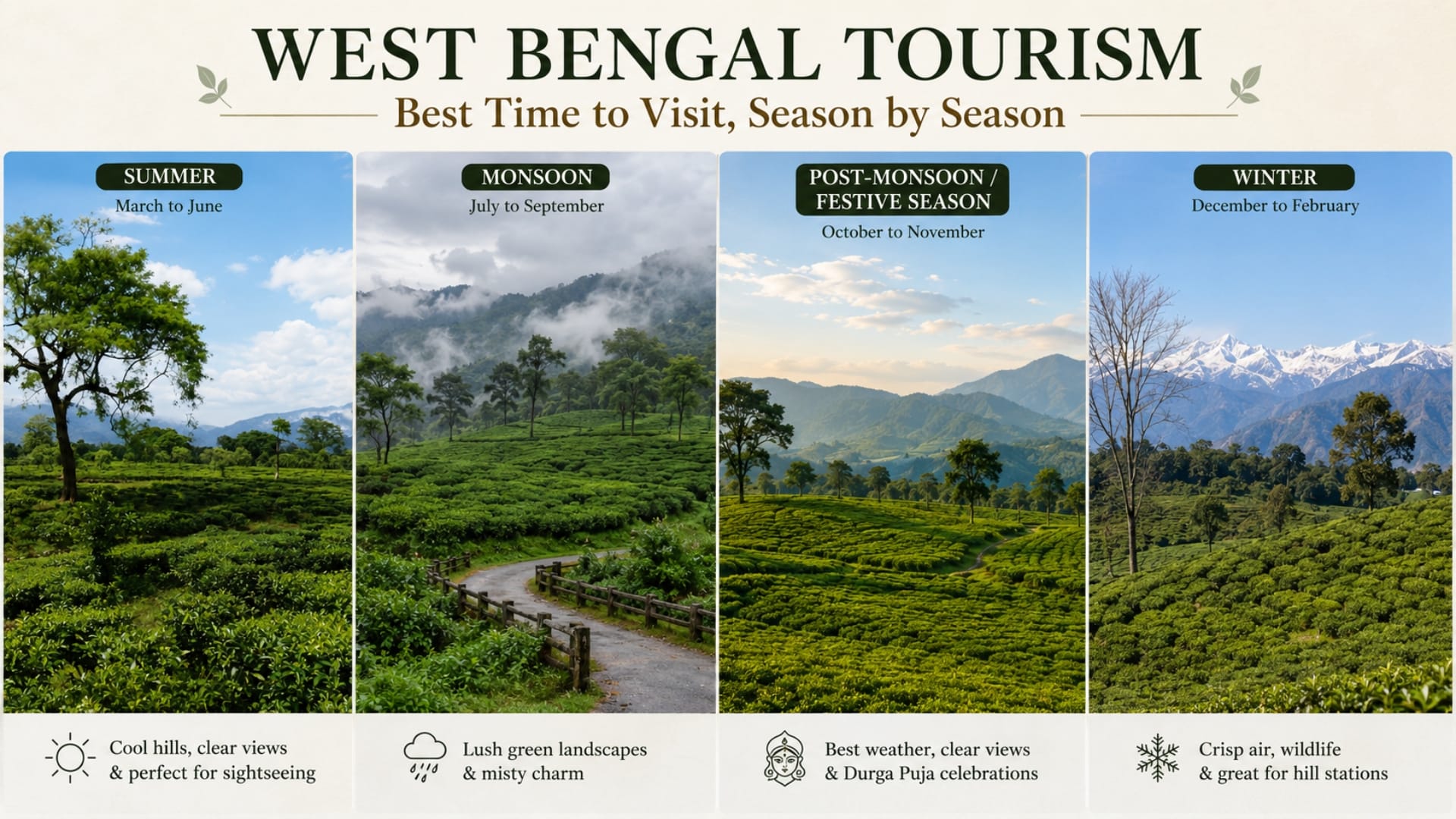
If you've been thinking of planning a trip to West Bengal, one of the first questions that comes to mind is: "arre, but which month should I go?" And honestly, that's a fair question. West Bengal is not a one-season place. From the sweltering plains of Kolkata to the forests and tea gardens of the Dooars, the weather changes so much across the state that "best time to visit" really depends on where exactly you're headed and what kind of trip you're after.
So let's break it down, season by season, the way you'd explain it to a friend who's asking you for travel advice over chai.
Summer (March to June): Best for the Hills, Skip the Plains
Summer in West Bengal is a tale of two extremes. Down in Kolkata and the plains, it gets hot and sticky, the kind of heat where you just want to stay indoors with the fan on full speed. Not ideal for sightseeing.
But head up to the Dooars, and it's a completely different story. Tucked along the foothills of the Himalayas, this region stays noticeably cooler and greener than the plains even through summer, thanks to its forests, rivers, and rolling tea gardens. It's peak season for forest and tea-garden tourism here. Mornings are pleasant, the gardens are lush, and it's a great time for jungle safaris in places like Gorumara and Jaldapara. If you're someone who loves the idea of waking up to fresh air and endless rows of tea bushes with the hills in the backdrop, summer is honestly one of the best windows to plan that trip.
Monsoon (July to September): Green, Lush, but Plan Carefully
Monsoon turns West Bengal green, really green, and the Dooars is where this really shows. The tea gardens look their most beautiful during this time, almost glowing with fresh growth, and the rivers and forests are at their fullest. If you love that lush, misty, green landscape, this season has its own charm.
That said, monsoon travel needs a bit more planning. Some forest areas and national parks in the Dooars stay closed during monsoon for the breeding season, and the Sundarbans can get quite humid and unpredictable too. It's not a bad time to visit, just not the most convenient one, best suited for travellers who don't mind a little rain interrupting their plans.
Post-Monsoon and Festive Season (October to November): The Best Time of the Year, Especially for Durga Puja
Now here's the season most Bengalis (and honestly, most travellers) look forward to the most. Once the monsoon clears out, the skies turn crisp and blue, the humidity drops, and the whole state seems to come alive. And right in the middle of this window falls the biggest celebration of them all: Durga Puja.
This year, Durga Puja 2026 falls from October 17 to 21, with Mahalaya on October 10 marking the start of the festive mood. If you've never experienced Durga Puja in West Bengal, it's genuinely something else. The pandals, the dhaak beats, the new clothes, the food stalls, the sheer energy on the streets, it's less like a festival and more like the entire state throwing one big, joyful celebration together.
For West Bengal tourism, this is where it gets even more interesting. October and November also happen to be some of the best months for the Dooars, since the forests reopen after the monsoon closure, the tea gardens are lush and comfortable to walk through, and wildlife sightings in Gorumara and Jaldapara pick up again. So if you time your trip around Durga Puja, you get to enjoy two things together: the cultural high of the festival season, and genuinely the best weather of the year for tea-country and forest travel.
A quick practical note: because this is peak season, hotels and homestays across the Dooars tend to fill up fast, and prices go up too. If Durga Puja travel is on your mind, it's worth locking in your stay well in advance rather than waiting till the last minute.
Winter (December to February): Crisp, Clear, and Great for the Hills and Wildlife
Winter is another lovely time to explore West Bengal, especially the Dooars. The air turns crisp, the skies stay clear, and this is prime season for wildlife spotting in Gorumara and Jaldapara national parks, since the humidity drops and animals are more active near the grasslands. Down in the plains, the weather turns pleasant and cool too, making it a good time for city sightseeing in Kolkata. It's also a great season for the Sundarbans, for the same reasons.
So, What's the Verdict?
- Want cool weather and clear forest views? Go between March-June or October-February.
- Want the biggest cultural experience of the year? Time your trip around Durga Puja in October.
- Love lush, green landscapes and don't mind some rain? Monsoon (July-September) has its own quiet charm.
- Planning a winter escape with wildlife and crisp air? December to February works beautifully.
If we're being honest though, October stands out as the sweet spot: great weather, festive energy, reopened forests, and tea gardens looking their absolute best. It's no surprise this is when the Dooars sees its highest footfall.
And if your West Bengal trip includes the Dooars, a stay that lets you actually experience tea country, not just drive past it, makes a real difference. Waking up to gardens instead of traffic, walking through the estate in the morning mist, watching the leaves being plucked and processed right in front of you, that's a very different kind of holiday compared to a regular hotel stay. Something worth keeping in mind while you're mapping out where to stay during your trip.